
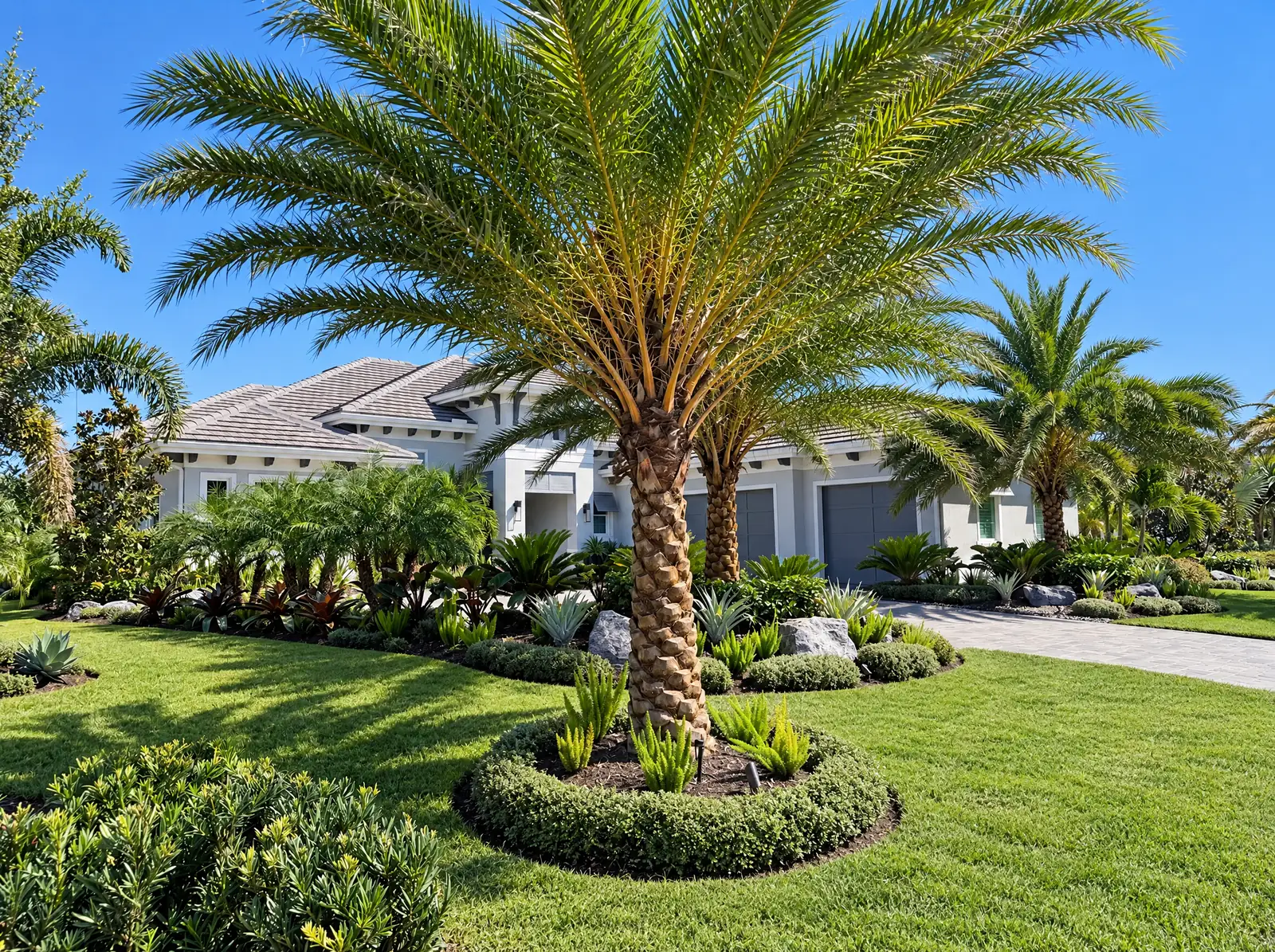
Palms are some of the most over-trimmed plants in Florida. Heavy trimming can look neat for a few weeks, but it often weakens the palm. Here is what the University of Florida’s IFAS extension recommends, and why it matters.
Remove only the dead fronds
UF/IFAS advises removing only fronds that are completely brown and hanging below the horizontal line, often described as the 9 and 3 o’clock positions. Broken fronds and spent flower or fruit stalks can come off too.
Green and yellowing fronds should stay. Even a frond that is partly yellow is still feeding the palm, including supplying potassium. Cut it early and the palm pulls those nutrients from its newer fronds instead, which can lead to deficiencies over time.
Skip the “hurricane cut”
Stripping a palm down to a few fronds at the top is often called a hurricane cut. It does not make the palm safer in a storm. UF/IFAS notes that it weakens the palm’s ability to withstand high winds, and repeated heavy cutting can cause the trunk to narrow just below the crown.
Treat 9 and 3 as a limit, not a target
The 9 and 3 guideline is the most you should ever remove, not the shape to cut to every time. A healthy palm keeps a full, rounded crown, and that is the goal.
Some palms trim themselves
Self-cleaning palms, such as royal palms and Christmas palms, drop their old fronds on their own. They rarely need trimming beyond clearing fallen fronds.
When to call a professional
Tall palms, palms near power lines or roofs, and palm removal are jobs for an insured crew with the right equipment. Our tree and palm work follows UF/IFAS pruning guidance, so your palms are trimmed for their health, not just their looks.